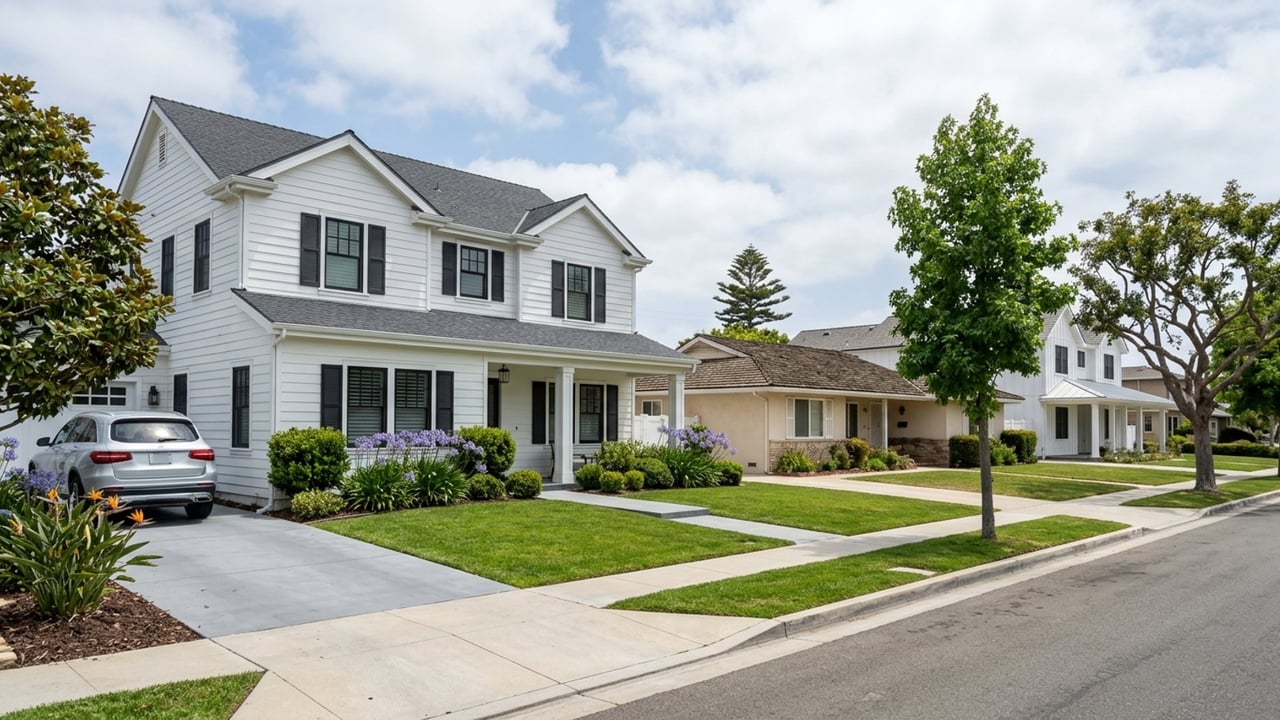
Selling a Home in Port Streets, Newport Beach, CA: Pricing, Prep, and Costs
Julie Pierzak November 20, 2026
Newport Beach's all-homes median sale price jumped 13.2% year over year, reaching $3,848,167 over the 90 days ending September 30, 2026.
Price your Port Streets home from recent neighborhood sales, not the city's headline gain. Like-for-like single-family values in Newport Beach rose about half as much as the all-homes figure, and most homes still closed below list. If you need a set closing date, price at the comps and sell as-is with full disclosures. If you have time, targeted updates and a higher test price are the alternative.
You own a home in the Port Streets and are deciding how to price it, whether to prepare it or sell as-is, and what the sale will cost you.
The figures below are city-wide context. The headline gain is a mix effect, and buyers still negotiate. Those buying a home in Port Streets can view current neighborhood options.
Single-family values rose 6.6% and condos fell 0.9% on 58 sales. The overall median jumped because pricier houses made up more of this year's sales. Buyers' agents will pull the single-family trend and Port Streets comps, so a list price built on the headline invites an early price reduction.
Only 9.1% of Newport Beach single-family homes closed above list last quarter. Plan to negotiate on price, credits or terms. A net estimate built on a bidding war will be off.
Single-family supply sits at 3.8 months with 251 active listings city-wide, a balanced market. Launch with pricing, photos and paperwork ready. A listing that sits invites low offers.
The city-wide $1,779 per square foot blends bayfront, island and hillside homes. Ask for every Port Streets closed sale from the last 6 to 12 months with condition and upgrade notes. Read each comp individually, since one unusual sale can skew a small sample.
These figures are city-wide. Port Streets comps come from a closed-sales pull.
Pricing near recent sales draws immediate interest. Testing a higher number for a home that stands apart means a longer wait and more negotiating.
List near the closest recent Port Streets closings, adjusted for upgrades and condition, to draw buyers while the listing is new. Strict comp pricing can undersell an unusually upgraded home or a standout view.
Listing above the comps can work for a distinctive home. With so few above-list sales, the market rarely chases price, so set a firm reassessment date. A reduction shows in the listing history and invites lower offers.
For illustration only: a hypothetical home listed at $4,000,000 that closes at the city's single-family median sale-to-list ratio of 96.7% sells for about $3,868,000, a $132,000 gap. Because the ratio is a median, about half of sellers closed further below list, so build your net estimate with a cushion.
How much you fix sets your upfront cost, your launch date and the buyer's bargaining power at inspection.
Listing without repairs saves time and upfront cash, but it doesn't excuse you from disclosing known problems. Buyers subtract the price of unknowns from their offer, often by more than the repair would have cost.
Let the buyer inspect and negotiate a credit for agreed items instead of repairing first. Prep stays light, but credits come off your net, and repair requests mid-escrow give the buyer bargaining power.
Targeted updates such as paint, flooring and kitchen refreshes help a Port Streets home compete. Get HOA architectural approval before any exterior change. The cost: weeks or months of delay, with no guarantee you recover the spend.
Professional photos and staging shape the online first impression. Staging is paid upfront, usually month to month, so a slow sale raises the cost.
Ordering these documents early cuts mid-escrow renegotiation and protects your timeline.
Under Civil Code Article 1.5, you must deliver a completed written Transfer Disclosure Statement of known property conditions to the buyer as soon as practicable before transfer of title. This can't be waived, even in an as-is sale. If it arrives after an offer is executed, the buyer can rescind within 3 days if delivered in person, or 5 days if by mail or electronically. If the buyer later finds something you left out, you face renegotiation or a dispute after closing.
Under Civil Code Article 1.7, you must deliver a Natural Hazard Disclosure Statement showing whether the property lies in mapped flood, fire, seismic or other hazard zones. Any waiver is void. Order it before listing, because a zone that surfaces late can change the buyer's insurance quote and reopen price talks.
Under Civil Code Section 4525, a seller in a common interest development must give the buyer governing documents, budgets and fee disclosures before transfer of title. The association may charge only a reasonable fee based on actual cost. Request the package as soon as you decide to sell, because a late package can delay the buyer's review.
Buyers and appraisers compare square footage and additions against city records. Pull your archived permit history from the City of Newport Beach Building Division's online lookup and match it to your current layout before listing. Unpermitted work can complicate financing or the appraisal and lead to a late price cut.
Every fee below comes out of your net proceeds, so request estimates before you accept an offer.
Commission is negotiable. Since August 17, 2024, the NAR settlement has barred sellers from offering buyer-broker compensation on an MLS. You may still agree to it off the MLS or communicate seller concessions. Get commission and any buyer-agent terms in writing. Declining buyer-agent compensation can shrink your buyer pool or come back as a credit request in the offer.
In Orange County, escrow and title charges are split by contract and custom. Ask the escrow company for an estimated seller net sheet at your expected price before setting a list date.
Ask the Port Streets HOA or its management company for current dues, the resale document fee and any transfer fees. The association sets them, and only the purchase contract can shift them to the buyer.
Your mortgage payoff and the property tax and HOA dues prorations settle at closing. Request a payoff statement for your expected closing date. It includes interest through closing, so a delayed close raises what you owe.
Plan each phase backward from your move date.
Pull comps, order the Natural Hazard Disclosure, request HOA documents, gather permit records, and finish prep or staging. Anything skipped resurfaces in escrow, where delays cost the most.
Compare offers on contingencies, financing and closing date as well as price. A high offer with heavy contingencies can net less, and it falls through more often than a clean one.
Inspection, appraisal and loan contingency periods run on dates in the purchase contract. The standard California Association of Realtors form defaults to 17 calendar days after acceptance for both appraisal and loan contingency removal. Until contingencies are removed, the buyer can usually cancel, so don't lock in a move or purchase on that sale.
If you must close by a set date, start with "Pricing to Recent Port Streets Sales" and "Selling As-Is," then plan backward with the timeline. If you'll trade more time on the market for a higher price, read "Testing a Higher List Price" and "Updating Before You List" together, since both add weeks. If permits or HOA approvals for past remodels are uncertain, check "Permits for Past Remodels" and "HOA Documents You Must Provide" before picking a list date. If you're weighing a rental, read the rental FAQ first.
Reach out for a Port Streets closed-sales pull or an estimated net sheet so you can model these scenarios with real numbers.
Zip-code searches return city-wide listings, not Port Streets results. Confirm your exact zip with the USPS lookup.
Yes, the neighborhood has a homeowners association. Ask it for amenity access rules, since buyers will ask about them along with dues.
The city-wide single-family median is 65 days on market. Add escrow time for the contract's contingency periods.
Yes. The rate is $1.10 per $1,000 of net consideration, about 0.11% of the sale price. Newport Beach's $0.55 per $1,000 city tax is credited against the county tax rather than added to it, and the contract sets who pays.
Yes. Renting a home in an R-1.5, R-2 or RM zone for 30 consecutive days or less requires a Short Term Lodging Permit and a business license, plus 10% transient occupancy tax. Check the Port Streets CC&Rs for minimum lease terms.
If you meet the IRS eligibility tests, you may exclude the first $250,000 of gain ($500,000 if married filing jointly). California taxes gains as income, so confirm with a CPA or tax advisor.
Stay up to date on the latest real estate trends.
Get assistance in determining current property value, crafting a competitive offer, writing and negotiating a contract, and much more. Contact us today.