Corona Del Mar Village vs Hills: What Suits You Best?
May 28, 2026
May 28, 2026
If you are choosing between Corona del Mar Village and the Hills, you are not just picking a home. You are choosing how your days will feel, how often you will walk versus drive, and what kind of setting will support your routine best. In a place as nuanced as Corona del Mar, that distinction matters, and understanding it can help you buy with more clarity and confidence. Let’s dive in.
In simple terms, the Village is the compact, pedestrian-oriented core, while the Hills are the more elevated, lower-density residential streets and view-oriented pockets. That difference comes through in Newport Beach planning documents, which describe Corona del Mar along Coast Highway as a village setting with retail, mixed-use buildings, and a strong pedestrian identity.
The broader Corona del Mar area is more varied. City materials also describe coastal bluffs, elevated viewpoints, and high-relief terrain in nearby residential areas. In daily life, that often translates to a very different feel from one micro-area to the next.
The Village is built around convenience and connection. Shops, restaurants, and other everyday stops line Coast Highway, and the area is designed to support walking. Buildings often front the sidewalk, while parking is pushed to the rear, shared lots, or structures.
If you like the idea of stepping out for coffee, dinner, or a beach walk without automatically getting in the car, the Village usually delivers that experience better. The City also describes Corona del Mar as a pedestrian-oriented village serving surrounding neighborhoods, which reinforces that main-street rhythm.
The area’s walking culture extends beyond Coast Highway. The Corona Del Mar Loop passes through the flowered streets of Corona del Mar and includes ocean views from Ocean Boulevard, adding to the Village’s day-to-day appeal for people who enjoy being out on foot.
Walkability comes with tradeoffs. In Corona del Mar parking areas, parking is paid, and in most city areas payment is required daily from 8 a.m. to 6 p.m. The City also notes that these spaces are first come, first served, so paying does not reserve a spot.
That does not mean the Village is difficult to live in. It does mean you should expect a more active setting, especially compared with quieter inland residential streets. Newport Beach also treats the Village as one of its designated high-density areas, which supports the idea that this is a denser and more energetic environment.
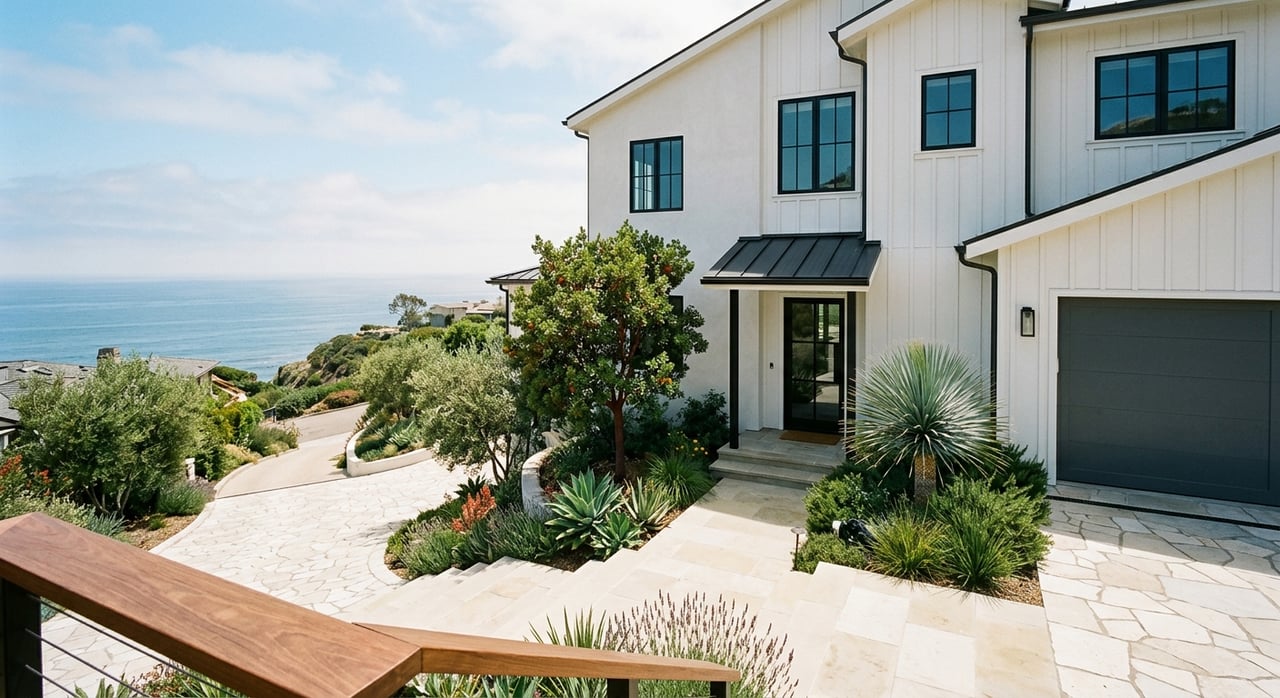
The Hills generally suit a more residential, view-forward lifestyle. Newport Beach planning and geographic materials describe eastern areas as less dense and predominantly single-family, with high-relief terrain and more elevated conditions than flatter coastal sections.
In practical terms, that often means a quieter pace, less foot traffic, and a stronger sense of separation from the commercial corridor. If your ideal day starts with privacy, a calmer street, and an elevated outlook, the Hills may feel like a better match.
The City’s scenic-resource inventory highlights Corona del Mar bluffs, Ocean Boulevard, Lookout Point, and Inspiration Point. Those references help explain why elevated pockets in and around Corona del Mar often carry strong appeal for buyers who prioritize outlook, topography, and a more tucked-away setting.
One of the clearest ways to decide between the two is to picture a normal weekday.
The Village tends to fit buyers who want:
If you want your home to support spontaneous outings and everyday convenience, the Village often aligns well with that goal.
The Hills tend to fit buyers who want:
If you prefer to come home to a calmer environment and are comfortable driving more often, the Hills may feel more natural.
The housing mix is another major distinction. Newport Beach housing documents note that older beach neighborhoods, including Corona del Mar, include duplexes, triplexes, and fourplexes. That supports what many buyers already see on the ground in the Village, where smaller lots and higher-density housing are common.
In the Village, you are more likely to find:
That mix can appeal to buyers who want lower-maintenance living, a lock-and-leave setup, or a foothold in Corona del Mar through an attached or multi-unit property type.
The Hills and inland pockets generally lean more single-family and more view-driven. City environmental materials describe Corona del Mar as including coastal bluff-top residential areas and note that less dense areas often provide more views of surrounding natural features.
It is easy to assume the Village is always less expensive and the Hills are always more expensive. The current market signals suggest the reality is more layered.
For condos and multi-family homes in Corona del Mar, current listing data shows inventory ranging from about $2.0 million to $8.0 million, with a median listing price of $4.39 million. Village-area examples include Flower Streets duplexes and other multi-unit properties that span a wide range depending on exact location and property type.
Recent closings also show how broad that range can be. Village-area sales have included homes around $2.25 million, $3.3 million, $3.33 million, and $3.6 million, while ocean-side sales have moved above $8 million. That tells you the Village is not one price band. It is highly sensitive to location, water proximity, and the kind of property you are buying.
The Hills can push even higher, but they can also be hard to measure because inventory is thinner. In Irvine Terrace, recent data showed a median sale price of $8.5 million last month, with only three homes sold in March 2026. That is a small sample, yet it still points to a more exclusive, lower-turnover segment.
Corona Highlands shows a similar pattern. Active inventory there was very limited, and neighborhood-specific pricing was less defined than in the broader Corona del Mar market. The safest takeaway is that hillside pricing can shift dramatically based on the view, lot utility, and exact street.
Across both the Village and the Hills, a few factors tend to matter more than the label alone.
Homes closer to the water or bluff edge can command strong premiums, even within the Village. That is one reason some smaller or more compact homes can still trade at very high prices.
The Hills often have an advantage when it comes to elevated outlooks, but not every hillside home has the same view value. Sight lines, orientation, and how protected the view feels can all shape demand.
A compact condo, a duplex, and a larger single-family home serve very different buyers. Even on nearby streets, pricing can diverge sharply based on the utility and flexibility of the property.
If you want your home to support a walkable, coastal routine, the Village is often the stronger fit. It is especially appealing if you value convenience, lower-maintenance property types, and a lively neighborhood pattern over maximum privacy.
If you want a quieter residential feel, more separation, and stronger odds of an elevated setting, the Hills often make more sense. That can be especially true if you are focused on single-family living, a calmer street presence, and long-term enjoyment of space and views.
The right answer is less about which area is better and more about which tradeoffs feel right to you. In Corona del Mar, that lifestyle match is often what turns a good purchase into a great one.
If you are weighing the Village against the Hills and want a more tailored read on streets, property types, and current opportunities, Julianne Pierzak can help you narrow the choice with local insight and a thoughtful, high-touch approach.
Stay up to date on the latest real estate trends.
Get assistance in determining current property value, crafting a competitive offer, writing and negotiating a contract, and much more. Contact us today.