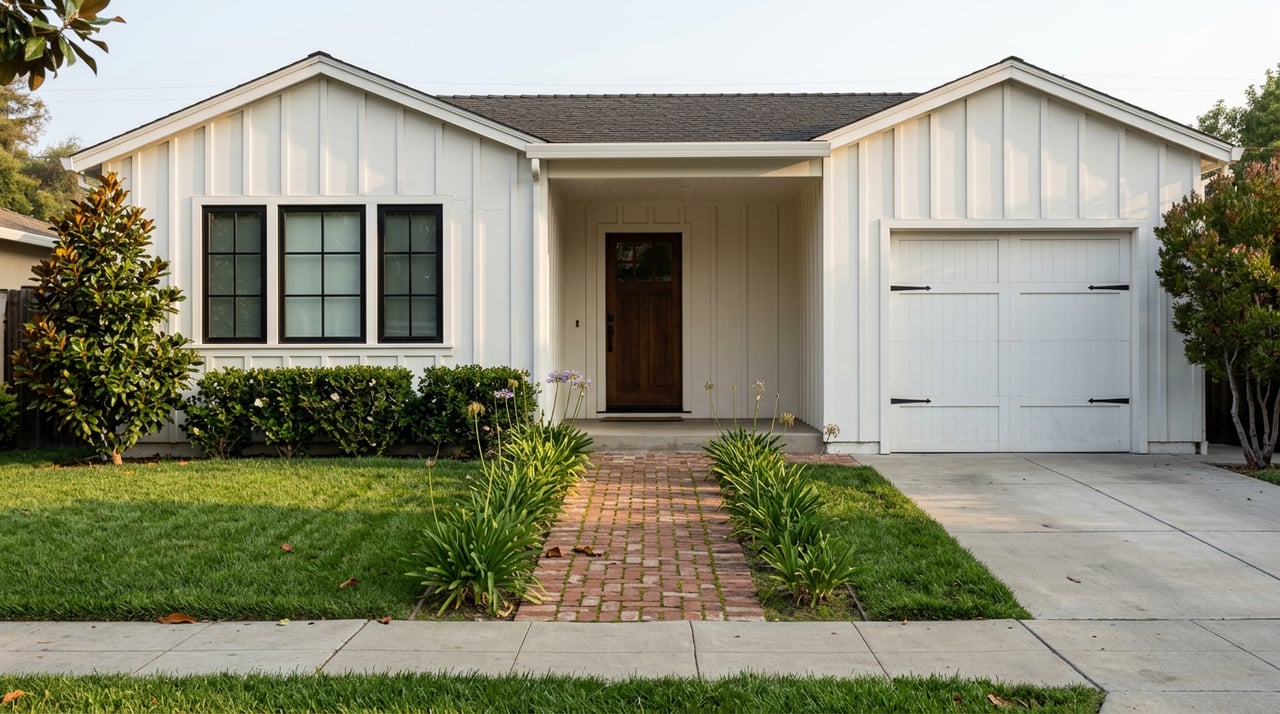
The Port Streets Median Price Is Averaging Two Different Houses
August 13, 2026
August 13, 2026
This summer, two listings went active in the Port Streets within weeks of each other. One, at 1961 Port Cardigan Place, had just been reconstructed in 2025 by Alicia Torosian Design and was featured on the 2026 Corona del Mar Home Tour. A few streets over, 2030 Port Weybridge Place was marketed plainly as an entry point, ready for a buyer to reimagine. Same Harbor View Community Association dues. Same greenbelt. Same walk to Roy O. Andersen Elementary without crossing a street.
The price gap between them was wide enough to cover a second home in La Quinta with the difference.
If you've been comparing the Port Streets to Corona del Mar or Newport Coast using a single median price per square foot, that number is quietly averaging two different housing products into one figure that describes neither of them well. Understanding why is the difference between pricing a listing correctly and leaving six figures on the table, in either direction.
The Irvine Company, working with the Donald L. Bren Company, built the Port Streets starting in the late 1960s across three construction phases, ultimately placing roughly 1,046 homes around a meandering greenbelt in what would become Newport Beach's East Bluff area. The community opened in 1968 with an average home price of $31,000, offered across nine original floor plans ranging from about 1,475 to 2,600 square feet in Cape Cod, Traditional, and Mediterranean styles.
Almost six decades later, that original inventory has split into two camps living on the same streets. Some homes remain close to their original footprint with quality updates. Others have been taken down to the studs or rebuilt entirely, with current ground-up estates commonly landing between 5,000 and 8,000 square feet on the same 6,000 to 8,000 square foot lots the Irvine Company platted in 1968. A recent high-profile Port Streets sale involved a 7,900-plus square foot contemporary reimagining that priced well into the eight figures. A few doors down, a buyer can still find a home closer to its original 1970s scale, priced as an opportunity rather than a finished product.
Both sit inside the same HOA boundary. Both show up in the same pool of "recent Port Streets sales" that an appraiser, a buyer's agent, or a portal algorithm will pull when estimating value.
As of February 2026, Redfin's neighborhood tracker put the Harbor View Homes median sale price at roughly $5.25 million, with a median price per square foot near $1,440. That single number is doing the work of describing both a preserved original in the 1,700 to 2,700 square foot range and a from-scratch estate at triple that size, on the same lot type, under the same association.
Treating that median as a benchmark for any individual Port Streets listing is a little like averaging the price of a well-kept vintage car and a custom-built replacement and calling the result "the price of a car in this neighborhood." The number is technically accurate and functionally useless for anyone trying to price a specific vehicle.
This is why current asking prices across the community span from the mid-$3 millions to well over $12 million, even though every one of those listings sits on comparable land inside the same triangle formed by MacArthur Boulevard, Ford Road, and San Miguel Drive. The spread isn't noise. It's two different pricing logics operating side by side: land-plus-renovation-budget value for the untouched originals, and finished-product value for the rebuilds.
The clearest way to see the split is to line up what's actually been trading in 2026.
| Address | Structure Status | Approx. Size | Lot Size | Notable Detail |
|---|---|---|---|---|
| 1961 Port Cardigan Place | Reconstructed 2025 | Not disclosed in listing | Inner loop | Designed by Alicia Torosian Design, featured on 2026 Corona del Mar Home Tour |
| 1700 Port Ashley Place | Newly reimagined | ~4,300 sq ft | 7,405 sq ft corner cul-de-sac | All-new flooring, bespoke cabinetry |
| New construction (Grissinger Fine Homes) | Ground-up, completed 2026 | ~5,087 sq ft | 6,240 sq ft | Designed by architect Craig Hampton, rare finished basement |
| 2030 Port Weybridge Place | Original condition | Not disclosed in listing | Standard Port Streets lot | Marketed as an entry point, price improvement |
Four homes, four very different starting points, all technically comparable by zip code and lot size and all functionally incomparable by price per square foot. The builders active in the neighborhood right now understand this split as well as anyone. Grissinger Fine Homes has become the community's go-to for ground-up custom builds. TJH has been delivering Coastal Traditional designs with two-story vaulted ceilings and French doors aimed at the everyday-family-living end of the buyer pool. Neither builder is competing with an untouched original on price per square foot, because they aren't building the same product.
In most housing markets, a wide bimodal spread like this eventually narrows as buyers arbitrage the gap, bidding up the cheaper originals until the math converges. Newport Beach doesn't behave that way. Well over six in ten luxury transactions in the city close in cash, which means most Port Streets buyers aren't running the numbers through a lender's appraisal model that forces a neighborhood-wide comp average. They're pricing the specific structure and the specific land in front of them, which is exactly why the original-versus-rebuild spread has persisted rather than compressed.
Citywide, Newport Beach's median sale price sat around $3.4 million over the three months ending April 2026, down 9.0 percent year over year, with homes selling after an average of 44 days on market compared with 49 days the year before, according to Redfin. That softening at the city level makes the Port Streets premium even more visible by contrast. Buyers here aren't chasing a rising tide. They're choosing, deliberately, between two distinct products inside one of the only Newport Beach neighborhoods where both are still available on the same street.
Before comparing price per square foot between two active or recently closed Port Streets listings, sort by structure type first:
Getting the product type right before comparing dollar figures is the single highest-leverage move available to a buyer or seller in this specific neighborhood. It's also the thing a generic market report, built from citywide averages, will never do for you.
Are most Port Streets homes still in original condition? No. Community guides describing the neighborhood note that virtually every home has been renovated, expanded, or rebuilt since the original 1968 to 1971 construction. Genuine untouched originals do still trade occasionally, but they're the exception rather than the rule at this point.
Does a finished basement add real value in the Port Streets? It's still rare enough that there isn't an established repeat-sale premium to point to. The 2026 Grissinger Fine Homes build is one of the few examples in the community, and its resale performance will be worth watching as a data point rather than treated as a settled fact.
How walkable is the neighborhood to schools? Roy O. Andersen Elementary sits at the center of the community, connected by greenbelt paseos that let children walk or bike there without crossing a street. Families comparing micro-locations within the Port Streets often weigh proximity to these paseos alongside proximity to the pools and clubhouses.
If you're comparing the Port Streets against another Newport Beach neighborhood, or trying to price a specific address inside it, a citywide median won't get you there. Julianne Pierzak can walk you through the actual comp set for your product type, original or rebuild, and put together a Get a Home Valuation that reflects what your specific home is worth rather than what the neighborhood average suggests.
Stay up to date on the latest real estate trends.
Get assistance in determining current property value, crafting a competitive offer, writing and negotiating a contract, and much more. Contact us today.